
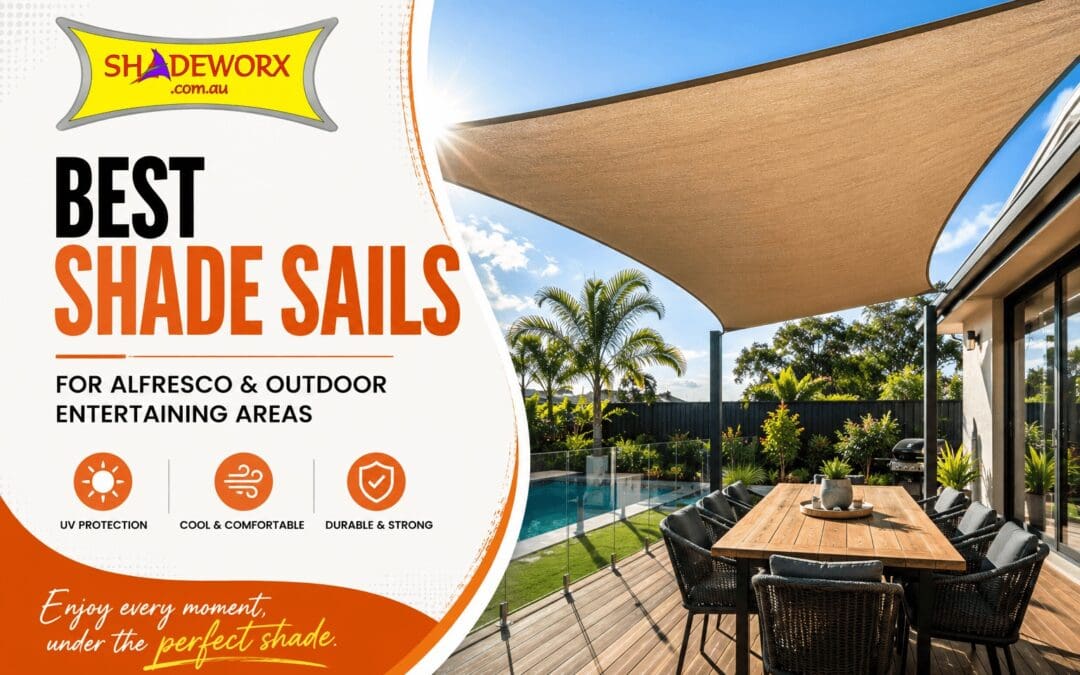
Shade sails for alfresco areas have become essential to how Australians live outdoors. Weekend barbecues, long lunches, and evenings on the patio all depend on one thing: proper shade. In Brisbane, the UV index stays high for most of the year, and summer storms can roll in without much warning. Getting the shade right is what turns an outdoor space into something you can actually use, not just something nice to look at.
Quick answer: A shade sail is a custom tensioned fabric canopy that provides UV protection and shade for outdoor areas such as patios, decks, gardens, and alfresco entertaining spaces. The right shade sail combines high UV protection, dependable performance in Brisbane’s weather, and a design that suits your outdoor lifestyle and the way the space is used.
That’s why shade sails for alfresco areas are one of the most popular backyard upgrades in Queensland. A shade sail is a type of architectural shade. It’s flexible, and it usually costs less than a solid patio cover. It can also be shaped to fit almost any layout.
This guide covers why shade sails work so well in Brisbane. You’ll learn what to look for in a good one, what affects the cost, how to keep it in good shape, and which mistakes to avoid.
Definition: A shade sail is a tensioned fabric canopy. It’s fixed between anchor points to block UV rays, cut down heat, and make outdoor spaces more comfortable. Unlike a fixed roof, the fabric itself carries the load. This is why correct tension and strong fixing points matter so much.
Why Shade Sails Are Perfect for Alfresco Areas
Quick answer: Shade sails suit alfresco areas because they block harsh UV, cost less than a solid roof, and can be shaped to fit almost any layout. They also give the space a modern look.
Brisbane’s climate is tough on outdoor living. The UV index often reaches extreme levels, even on mild-looking days. Humidity stays high through summer, and storm season brings sudden downpours. Without proper shade, an alfresco area can get too hot to sit in by mid-morning.
Shade sails help with all of this. Here’s what they bring to a backyard entertaining space:
- Sun protection – A good sail blocks most UV rays, so the space stays usable through the middle of the day.
- Comfort – In Brisbane’s warmer months, even a few hours of shade can make a noticeable difference by keeping outdoor surfaces cooler and making entertaining more enjoyable.
- Better entertaining – Guests stick around longer when they’re not squinting into direct sun.
- Property appeal – A well-installed sail is a modern feature that many buyers look for.
- Design flexibility – Sails can be layered, angled, and shaped around trees, pools, or awkward corners. A fixed patio cover can’t do this.
- Cost effectiveness – A shade sail usually costs less than a pergola or solid roof, for a similar amount of shade.
For a Brisbane backyard, that mix of UV protection and flexibility is hard to beat.
What Makes a Great Shade Sail?
Quick answer: A great shade sail comes down to three things. The UV rating of the fabric. Correct tension during installation. And the quality of the hardware holding it up. Get any one of these wrong, and the sail won’t perform well, no matter how good it looks on day one.
Understanding UV Ratings (Why the Number Matters)
Most people see “blocks 95% UV” or “blocks 99% UV” and assume the gap is small. It isn’t. UV blocking numbers don’t work in a straight line. Moving from 95% to 99% cuts the UV reaching the ground by about five times, not just four percentage points. For a space where people sit for hours, that gap adds up fast.
Here’s what’s worth knowing:
- UV rating is the percentage of UV radiation the fabric blocks, tested in a lab.
- UPF rating stands for Ultraviolet Protection Factor. It’s a similar measure, more often used for clothing and shade fabric, and it shows how much UV gets through to your skin. UPF 50+ blocks roughly 98% or more.
- The Australian UV Index often hits “extreme” (11+) across Brisbane in summer. This is why Cancer Council Australia lists shade as one of the five key sun-safety steps, along with slip, slop, slap, seek, and slide.
- 95% vs 99% UV block matters most for spaces used in peak UV hours (10am–3pm). It also matters more for kids, fair skin, or anyone outdoors for long stretches.
In short: a cheaper 90–95% shade cloth may suit a shaded courtyard just fine. A fully exposed, north or west-facing alfresco area does better with premium 99%+ UV-resistant fabric.
Waterproof vs Breathable Fabric
Breathable shade cloth lets air pass through the weave. This keeps the area underneath cooler, but it won’t stop rain. Waterproof fabric sheds rain, but because it’s a sealed material, it traps more heat than a breathable sail.
Strength, Wind Resistance and Fire Ratings
A sail needs to handle wind without flapping too much. Flapping puts stress on the fabric and stitching over time. Some council areas and bushfire-prone zones also need fabric with a specific fire rating. It’s worth checking this before you buy, especially near bushland.
Stitching, Tension and Hardware
Multiple rows of UV-stabilised thread hold up far better than a single line of stitching. This matters most at the corners, where tension is highest. Even the best fabric will sag or flap loose if it isn’t tensioned properly. Hardware like turnbuckles, D-shackles, and wire cable should be marine grade, or something just as resistant to rust. This matters even more in Brisbane’s humid, coastal-adjacent air.
Fabric and installation matter about equally. Even premium fabric will fail early if it’s poorly tensioned. That’s one reason companies like Shadeworx pair heavy-duty, UV-resistant fabric with professional, CAD-planned installation and engineered posts, instead of just selling fabric on its own.
Best Types of Shade Sails for Alfresco Areas
Quick answer: Standard shade cloth suits dry, sunny spots and costs less. Waterproof sails cost more, but let you use the space in the rain. Heavy-duty commercial fabric is built for bigger spans and longer-term use.
Standard Shade Cloth
Pros
- Costs less than waterproof fabric
- Breathable, so the area stays cooler
- Wide range of colours
Cons
- Won’t stop rain
- Needs replacing sooner than premium grades in harsh sun
Best for: Areas mainly used on dry, sunny days. Also good where airflow matters more than rain cover, like a pool deck or a backyard sun shade over a play area.
Waterproof Shade Sails
Pros
- Keeps the alfresco area usable in the rain
- Extends how many days a year you can use the space
- Often paired with heavier fabric and stronger stitching
Cons
- Feels warmer underneath than breathable cloth, since air can’t pass through
- Usually a higher upfront cost
- Needs the right slope, or water pools instead of running off
Lifespan and maintenance: A well-installed waterproof sail lasts about as long as a premium breathable one, as long as it’s tensioned right and cleaned now and then. Since the fabric is sealed, dirt and pollen tend to sit on top rather than pass through. So waterproof sails usually need more frequent cleaning to avoid staining or mould in damp weather.
Drainage and condensation: Correct slope really matters here. A waterproof sail installed too flat will pool water after rain. That adds weight and stress on the fixing points, and can tear the fabric over time. On humid Brisbane mornings, you might also notice some condensation on the underside. That’s normal, and it usually clears once it warms up. Still, it’s worth planning for in the slope and airflow.
When not to use waterproof fabric: For pools or garden areas, breathable shade cloth is often the better pick, since airflow and cooling matter more there. In Brisbane, west-facing patios can get very hot in the afternoon. Many homeowners choose breathable fabric here for comfort, unless rain protection is the priority.
Best for: Homes that entertain year-round and want the outdoor area protected no matter the weather. A poorly tensioned waterproof sail often pools water after heavy rain, which can shorten its life. So correct installation matters even more with this type.
Heavy-Duty Commercial Grade Fabrics
Commercial shade sail fabric is built for constant use and bigger spans. It’s often used for hospitality venues, schools, and larger home entertaining areas. It typically offers:
- A longer lifespan than standard residential-grade cloth
- Stronger UV resistance, useful for west-facing or fully exposed areas
- Better warranties, which shows how much the manufacturer trusts the fabric
It costs more. But for a large entertaining area, outdoor kitchen, or commercial shade sail project that gets heavy use, the extra durability often pays off over time.
Design Ideas for Modern Outdoor Entertaining Areas
Quick answer: Triangular and square sails are still the most popular shapes. But layered, multi-sail layouts give the best coverage and the most modern look for larger alfresco areas.
A shade canopy doesn’t have to be one flat triangle bolted to the fence. Here are a few ideas worth considering:
- Triangular sails – Simple, affordable, and effective for smaller patios or corners.
- Square or rectangular sails – Give more even coverage across wider entertaining areas.
- Layered sails – Two or three sails at different heights and angles add depth. They also avoid flat, uniform shade.
- Multi-sail layouts – Useful for larger blocks, covering a dining zone and a lounge zone separately.
- Neutral colours – Charcoal, sand, and stone suit most modern homes and won’t clash with existing furniture.
- Coastal styles – Lighter colours and simple shapes suit beachside or Queenslander-style homes.
- Contemporary homes – Sharp angles and dark tones pair well with clean, modern lines.
- Outdoor kitchens – Sails placed over prep and cooking zones keep the space usable in the middle of the day.
- Poolside entertaining – Breathable fabric is usually best here, so the area doesn’t trap heat over the water.
- Patio extensions – A sail can stretch the usable footprint of a patio well beyond the existing roofline. It works as a patio cover in its own right.
Suburbs like New Farm, Paddington, Ascot, and Wynnum have a real mix of home styles, from Queenslanders to modern builds. Shade sail design is flexible enough to suit most of them. It’s really about matching the shape and colour to the home, not forcing one look on every property. Homes on elevated blocks, like many in Paddington, tend to get stronger wind than sheltered suburban patios. That’s worth thinking about in both the design and the fixing-point strength.
Style matters, but function should come first. It helps to think through how the space is actually used — morning coffee, weekend lunches, evening drinks — before locking in a shape.
Installation Tips for Brisbane Homes
Quick answer: In Brisbane, correct tension, slope, and strong fixing points matter more than almost anything else. Get the installation wrong, and even premium fabric will fail early.
Installation quality is just as important as the fabric itself. Maybe more so. A cheaper fabric installed correctly will often outlast an expensive fabric installed poorly.
Here’s what needs to be right:
- Correct tension. A sail needs enough tension to stay taut in the wind, without putting too much stress on the stitching or fixing points.
- Proper slope. Sails should be angled, not flat, so water runs off instead of pooling.
- Drainage and water pooling. Flat or loose sails collect water after storms. This adds a lot of weight and can tear the fabric or pull out fixing points.
- Wind loads. Brisbane’s storm season brings sudden, strong gusts. Fixing points and posts need to be rated for the size of the sail.
- Strong fixing points. Whether it’s attached to a house, a post, or another structure, the fixing point has to handle ongoing tension, not just one strong pull.
- Clay soil footings. Many Brisbane suburbs sit on reactive clay soil, which expands and shrinks with moisture. Footings need to be deep and built properly, or posts can shift over time.
- Storm season timing. Storms build quickly later in the year. It’s worth having sails checked or re-tensioned before the season starts.
With Brisbane’s mix of strong sun, seasonal storms, and varying site conditions, having a shade sail professionally installed is often the better long-term choice. Before any fabric is cut, Shadeworx uses specialist CAD software to design the sail, calculate the correct tension, and position fixing points for a secure, long-lasting fit. Their Brisbane-based team also allows for local wind loads and clay soils during installation.
Is professional installation necessary? For most alfresco setups, yes. DIY installs can work for very small, simple sails. But getting the tension, slope, or fixing points wrong is the biggest reason sails fail early or come loose in storms.
How Long Do Shade Sails Last?
Quick answer: A well-made, properly installed residential shade sail usually lasts about 10–15 years. This depends on fabric grade, UV exposure, and how well it’s looked after. Commercial-grade fabric can last even longer.
A few things have the biggest impact on lifespan:
- UV exposure – Fully exposed, north or west-facing sails wear out faster than shaded or south-facing ones. Constant sun breaks down the fibres over time.
- Fabric grade – Premium, UV-stabilised fabric usually holds its strength and colour longer than budget shade cloth.
- Tension and installation – A correctly tensioned sail flaps less, and this directly stretches out its working life.
- Maintenance – Regular cleaning and quick re-tensioning after storms both help a sail reach its full lifespan.
- Wind exposure – Sails on open or elevated blocks tend to wear out faster than those in more sheltered spots.
Look out for a few signs that it’s time to replace a shade sail: fraying at the stitching, fabric that’s gone brittle or stretchy instead of snapping back into shape, noticeable colour fading, small tears that are getting bigger, or a sail that won’t hold tension no matter how often you adjust it. It’s easier to catch these signs early than to deal with a tear opening up mid-storm.
How to Maintain Your Shade Sail
Quick answer: Most shade sails only need light, regular care. An occasional clean, a tension check, and a look-over after big storms is usually enough to get the full lifespan out of it.
- Cleaning. A soft brush and a hose, or a mild detergent, is usually enough to clear dust, pollen, and grime. Avoid high-pressure water near stitching, since it can work the threads loose over time.
- Retensioning. Fabric can stretch a little over its first year or two. A periodic tension check, especially before storm season, keeps the sail performing well and stops it from flapping.
- Storm inspections. After a big wind event, check the fixing points, cables, and turnbuckles for movement or rust. This matters most on older installs.
- Bird droppings. These are acidic and can stain or weaken the fabric if left too long. Clean them off promptly rather than waiting for a general wash.
- Mould. This shows up more on waterproof fabric, in shaded, damp spots. A mild fabric-safe cleaner usually sorts it out. But if mould keeps coming back, the area may not be drying out properly between rain events.
- Storage. Some smaller, removable sails come down over the off-season or before major storms. If your sail is designed to be removed, store it clean and dry to stop mildew from building up.
Common Mistakes to Avoid When Buying a Shade Sail
Quick answer: Most shade sail problems come down to a handful of avoidable mistakes at the buying or installation stage. It’s rarely the fabric itself.
- Buying cheap, generic online sails. These aren’t shaped for your space, and budget fabric often skips proper UV stabilising or reinforced stitching.
- Incorrect measurements. A sail that’s too small leaves gaps in coverage. One that’s too big is hard to tension properly.
- Flat installations. Sails without enough slope pool water, which stresses the fabric and fixing points far more than wind alone.
- Ignoring prevailing winds. A design that looks great on paper can catch wind like a real sail if it doesn’t account for the property’s usual wind direction.
- Weak fixing points. Attaching to a fence, a light structure, or a weak section of wall is a common cause of early failure.
- Choosing colour on looks alone. Colour affects how much heat the sail holds and how soon fading will show. It’s worth weighing style against performance, not just picking a favourite shade.
What Affects the Cost of a Shade Sail?
Quick answer: Shade sail pricing depends on fabric type, size, hardware, and how much engineering and installation work the site needs. It’s not just about the size of the sail.
Instead of one average price, it helps to know what actually drives the cost:
- Fabric type – Breathable shade cloth usually costs less than waterproof, sealed fabric.
- Size and shape – Bigger sails, or multi-sail layouts, need more material and more complex tensioning.
- Waterproofing – A fully waterproof sail usually costs more than a similar breathable one, due to the fabric and sealed seams.
- Hardware – Marine grade hardware, heavier cabling, and larger turnbuckles cost more than basic fittings. But they hold up far better in Brisbane’s humidity and storms.
- Installation complexity – Fixing to an existing structure is usually simpler, and cheaper, than putting in new posts and footings.
- Engineering needs – Sites on reactive clay soil, elevated blocks, or with high wind exposure may need extra engineering. This adds to the cost, but lowers the risk of failure later.
It’s worth thinking of a shade sail as an investment in your outdoor space, rather than comparing it to the cheapest online listing. Rather than focusing only on the upfront price, it’s worth considering long-term performance. A professionally designed and engineered custom shade sail generally lasts longer and performs more reliably than a budget kit, making it a better investment over time.
Shade Sails vs Other Outdoor Shade Options
Quick answer: Shade sails are usually the most affordable, flexible option for irregular or large spaces. Pergolas and awnings last longer but cost more. Umbrellas and gazebos suit smaller, temporary needs.
| Feature | Shade Sails | Pergolas | Umbrellas | Gazebos | Retractable Awnings |
|---|---|---|---|---|---|
| Cost | Low–Medium | Medium–High | Low | Low–Medium | Medium–High |
| Maintenance | Low | Medium | Low | Low | Medium |
| Flexibility | High (custom shapes) | Low (fixed structure) | Medium (movable) | Medium | Medium |
| Weather protection | Good (better with waterproof fabric) | Very good | Limited | Limited | Good when extended |
| Appearance | Modern | Traditional/solid | Casual | Casual | Modern |
| Installation | Moderate | Complex | Simple | Simple | Complex |
| Lifespan | 10–15+ years (quality dependent) | 20+ years | 3–5 years | 5–10 years | 10–15 years |
A shade sail tends to be the better choice for a large or irregular space, a tighter budget, or a more modern, architectural look. A pergola or awning may suit better when a fully solid, permanent roof is the priority. A waterproof sail sits somewhere in between. It won’t fully replace a solid patio roof, but for most alfresco entertaining, it gets close, and costs a lot less.
How to Choose the Right Shade Sail for Your Home
Quick answer: Choosing the right shade sail starts with understanding how the outdoor space is used, along with the level of sun, wind, and rain it experiences. Then match the fabric type, shape, and size to those answers.
Before choosing a shade sail, work through this short checklist:
- Is rain protection needed? If the area is used year-round, waterproof fabric is worth the extra cost.
- How much afternoon sun hits the area? West-facing spaces need a higher UV-rated fabric.
- Is wind exposure high? Open blocks or elevated properties may need stronger hardware and extra fixing points.
- What style suits the house? Colour and shape should match the home’s existing look.
- How large is the entertaining area? Bigger spaces may need more than one sail.
- Is professional installation required? For anything beyond a small, simple sail, the answer is usually yes
Key Takeaways
- Match fabric type (breathable vs waterproof) to how the space is actually used.
- UV exposure direction affects which fabric grade makes sense. And the jump from 95% to 99% UV block matters more than it sounds.
- Larger or irregular areas usually need more than one sail.
- Professional installation, strong posts, and marine grade hardware lower the risk of early failure.
Why Homeowners Choose Custom Shade Sails
Quick answer: Custom shade sails are built to fit the exact shape of a property. This gives better coverage, cleaner drainage, and a longer lifespan than an off-the-shelf sail.
Off-the-shelf sails come in standard sizes and shapes, which rarely match a real patio or entertaining area. Custom designed shade sails solve this by being planned around the actual space. Here’s what you get:
- Better fit – No awkward gaps or overhang, since the sail is measured to the space.
- Better appearance – A sail cut and tensioned for the exact area looks more intentional than a generic size stretched to fit.
- Longer lifespan – Correct sizing means even tension across the fabric, which cuts down wear at stress points.
- Better drainage – Custom slope and fixing heights are planned to shed water properly.
- Improved safety – Properly engineered fixing points and footings lower the risk of failure in strong wind.
- Increased property value – A well-designed, professionally installed outdoor space is a genuine selling point.
Want to see the fabric grades on offer? Our fabric page covers waterproof shade sail and breathable options in more detail. Our customer install gallery shows finished alfresco projects around Brisbane. We also work across both residential shade sails and commercial shade sails. The same design and engineering process applies, whether it’s a backyard patio or a bigger hospitality or school project.
Why Brisbane Homeowners Choose Shadeworx
Quick answer: Shadeworx has been designing, making, and installing shade sails in Brisbane for more than 25 years. That experience is reflected in a design process that considers Brisbane’s climate, site conditions, and structural requirements, allowing each custom shade sail to be tailored to the property instead of relying on a standard design.
A shade sail is only as good as the process behind it. That’s where experience tends to show:
- 25+ years of experience designing and installing shade sails across South East Queensland.
- 24,000+ sails manufactured for homes and businesses across Australia.
- Australian made, built at a Brisbane production hub.
- CAD-designed, using tension membrane software. Tension and fixing points are planned before manufacturing begins, not worked out on-site.
- Experienced industrial machinists, making each sail to measure.
- Heavy-duty, marine grade hardware, suited to Brisbane’s humidity and storms.
- Professional installation, allowing for local wind loads and reactive clay soils.
- Solid warranties and local support, so any adjustment down the track is handled by the same team that installed it.
A well-designed, professionally installed shade sail can offer reliable long-term performance in Australian conditions. That’s the standard this level of experience is built around, not a claim about being the single best option on the market. Want to talk through installation services or check what’s covered under warranty? Our gallery is a good place to see the range of shapes and colours completed across Brisbane.
Frequently Asked Questions
What size shade sail do I need for an alfresco area?
It depends on the space. Most alfresco sails range from around 3m x 4m for small patios, up to 6m x 8m or more for bigger entertaining zones. Measure the area you want covered, then add a small margin so the sail’s edges overhang the space slightly for full sun protection.
Can a shade sail attach to my house?
Yes, in most cases. Shade sails commonly attach to a house wall, fascia, or eave using a properly rated fixing point. A professional installer will check the wall’s strength first, since it needs to handle ongoing tension, not just a single pull.
What colour shade sail suits a modern outdoor area?
Neutral tones like charcoal, sand, and stone are the most popular for modern homes. They blend with existing exteriors and furniture. Darker colours block slightly more heat and glare. Lighter colours reflect more sun and can help keep the space cooler underneath.
Are shade sails worth it?
For most Brisbane homes, yes. The mix of UV protection, comfort, and lower cost compared to a solid patio roof makes shade sails one of the better value upgrades for an outdoor area, as long as the fabric and installation are done properly.
Do dark shade sails get hotter?
Yes. Darker colours absorb more heat and can feel warmer underneath, especially with waterproof fabric. Lighter, neutral tones reflect more sunlight, which can help keep the space cooler. But the difference is usually small with quality UV-resistant fabric.
Which colour lasts longest?
Lighter and mid-tone colours usually show less fading over time than very dark shades, since UV wear shows up more against strong colour. Fabric grade matters more than colour choice alone. Premium UV-stabilised fabric holds its colour better no matter the shade.
Do shade sails fade?
Yes, all shade sail fabric fades over years of UV exposure. Premium UV-stabilised fabric fades more slowly than budget shade cloth. Fully exposed, north or west-facing sails usually show fading sooner than shaded or south-facing ones.
Can waterproof sails leak?
A properly installed waterproof sail, with the right tension and slope, shouldn’t leak in normal rain. Leaks usually come from not enough slope causing pooling, ageing seam seals, or small tears, rather than the fabric itself failing.
How often should shade sails be replaced?
Most residential shade sails last 10–15 years with proper care. This varies with fabric grade, sun exposure, and maintenance. Fraying, brittle fabric, or a sail that won’t hold tension are the clearest signs it’s time for a replacement.
How much wind can they handle?
A correctly engineered shade sail, with properly rated fixing points and posts, can handle typical Brisbane storm-season winds. The wind rating depends on the design and site. That’s why installers check wind loads before setting fixing points, rather than using one generic figure.
Can you leave them up year-round?
Many shade sails are built to stay up permanently, as long as the fabric, hardware, and fixing points are rated for it. Some people take down smaller, lighter sails before major storms. But a properly engineered permanent sail usually doesn’t need this.
Are they covered by warranty?
Reputable manufacturers usually offer warranties covering fabric and workmanship, though the terms vary between suppliers. It’s worth checking exactly what’s covered, and whether professional installation is needed to keep the warranty valid.
How much maintenance is required?
Generally, not much. An occasional clean, a periodic tension check, and a quick look after big storms is usually enough to keep a shade sail performing well for its full lifespan.
Conclusion
A well-chosen shade sail can turn an alfresco area from a space that’s too hot to use into one that works for entertaining all year round. The right mix of UV protection, fabric type, and design makes a real difference to comfort. Correct installation, regular care, and realistic expectations around lifespan are what decide whether that sail lasts ten years or two.
For Brisbane homes dealing with high UV, humidity, and storm season, getting the fabric, engineering, and installation right matters more than picking the cheapest option. Want advice for your own outdoor space? The team at Shadeworx has spent more than 25 years designing and installing shade sails across Brisbane, and can help you work through the options for your home. For colour inspiration, check out our colour guide blog next.
